

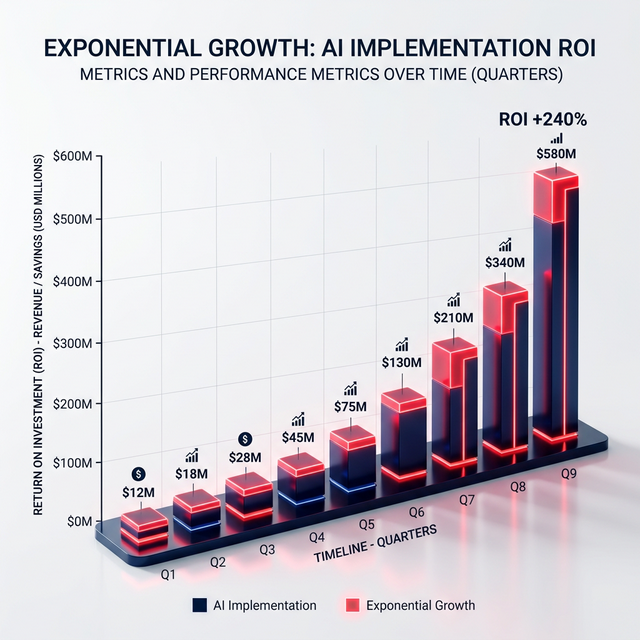
Few topics generate more executive excitement — and more organizational frustration — than the business case for large language model deployments. The headline numbers are extraordinary. McKinsey's 2023 landmark report on generative AI projects that the technology could add between $2.6 trillion and $4.4 trillion annually to the global economy across 63 identified use cases. An IDC study commissioned by Microsoft found an average ROI of 370% for enterprise generative AI deployments, with leading companies achieving over tenfold returns.
These numbers are real. They are also, without careful contextualization, dangerously misleading for organizations planning their own AI investment strategy.
The Payback Period Problem: Why Most ROI Projections Are Too Optimistic
Deloitte's 2025 AI Survey is a necessary corrective to the headline optimism. Their research found that the typical payback period for a satisfying ROI from generative AI investment is not weeks or months — it is two to four years. That is substantially longer than the 7-12 months organizations typically expect from conventional technology investments. Only 6% of organizations see returns in under a year.
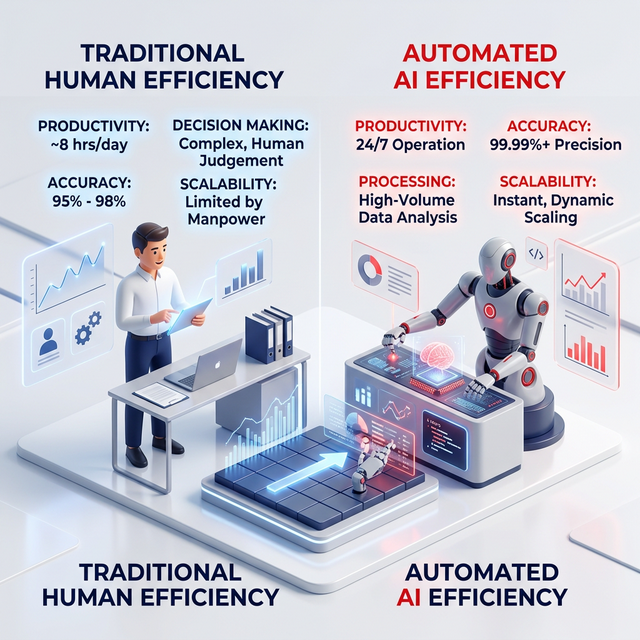
The gap between expectation and reality arises from underestimating the full cost of implementation. Organizations frequently account for the visible expense — the API subscription, the development hours, the software licences — while underestimating the invisible costs that determine whether the deployment actually delivers value.
The Full Cost Taxonomy for LLM Implementations
Hard Costs (typically budgeted): API token costs, compute infrastructure, development and integration work, tooling subscriptions (n8n, orchestration platforms, vector databases).
Soft Costs (frequently missed): Data preparation and cleaning, prompt engineering iteration, output validation framework development, staff retraining, change management, compliance review, and the ongoing cost of human review capacity for edge cases the model cannot handle autonomously.
Opportunity Costs (almost never modelled): Engineering time diverted from product development, the cost of a failed POC that delays production deployment by 6 months, the reputational cost of an LLM output error that reaches a customer.
The Three-Variable ROI Framework
Rather than attempting to model LLM ROI as a single number, we recommend that organizations structure their business case around three distinct variables, modelled independently and then aggregated.
Variable 1: Labour Displacement and Reallocation Value
This is the most straightforward component. Identify the specific tasks that the LLM automation will handle autonomously, estimate the current labour hours consumed by those tasks, and apply a fully-loaded cost per hour. A mid-market accounts payable team processing 5,000 invoices per month at 12 minutes per invoice represents 1,000 labour hours per month. At a fully-loaded rate of £45/hour (including benefits, management overhead, and office space allocation), that is £45,000 per month in labour cost — not £21,600, which would be only the base salary component. The fully-loaded figure is what actually disappears from your P&L when the workflow is automated.
One critical nuance: labour displaced is not always labour saved. If the 10 people currently processing invoices are reassigned rather than reduced, the financial benefit does not appear as cost savings — it appears as capacity increase without headcount growth. This is equally valuable, but requires a different modelling approach (capacity-enabled revenue growth rather than direct cost reduction).
Variable 2: Error Rate Reduction and Quality Value
Manual processes have error rates. In accounts payable, industry benchmarks suggest a 1-3% error rate on invoice data entry. At 5,000 invoices per month with an average value of £2,500, a 2% error rate represents £250,000 in incorrectly processed invoices per month — some of which result in overpayments, some in underpayments, all of which require costly reconciliation. An LLM-powered workflow with a deterministic validation layer can reduce this to 0.1-0.3%, generating error reduction savings that dwarf the labour cost savings in many deployments.
Variable 3: Speed-to-Value and Competitive Positioning
The least tangible but potentially most important variable is the accelerated execution speed that automation enables. If your competitors process new client contracts in 3 days and you process them in 30 minutes, that is not an efficiency gain — it is a competitive advantage that affects win rates, customer perception, and net revenue. This variable is genuinely difficult to quantify but should never be excluded from the ROI model simply because it resists precise measurement.
What McKinsey's $4.4 Trillion Projection Actually Means at Firm Level
McKinsey's economic potential figure is a global aggregate across all industries and all use cases. The same report identifies the highest-value use cases as customer service/operations, marketing/sales, software engineering, and R&D — and notes that approximately 50-75% of the total value is concentrated in just these four functions.
For a £50M revenue professional services firm, the directly relevant figure is not $4.4 trillion. It is McKinsey's specific finding that generative AI can boost tech talent productivity by reducing time spent on software engineering tasks by up to 60%, and that AI copilots in customer operations can reduce handling time by 30-40% while simultaneously improving customer satisfaction scores.
Building the Business Case: A Practical Template
Effective ROI modelling for LLM implementations follows a discovery-first approach. Before writing a single line of code, conduct a structured process audit for the target workflow: measure actual time per task, actual error rate, actual exception handling overhead, and actual headcount allocation. Many organizations discover during this phase that the workflow they assumed took 2 hours per case actually averages 4.5 hours when exception handling is included — and their ROI calculation doubles before a single API call is made.
According to Deloitte's research, 74% of organizations with advanced generative AI initiatives report meeting or exceeding their ROI expectations. The common thread among successful deployments is not the sophistication of the model — it is the rigor of the pre-implementation discovery process that accurately defines the baseline.
Citations & Reference Sources
- McKinsey: The Economic Potential of Generative AI — The Next Productivity Frontier (2023)
- McKinsey: State of AI in Early 2024 Report
- Deloitte: Now decides next — 2025 AI Survey Report
- World Economic Forum: Generative AI's Economic Potential
- Anthropic: API Token Pricing for Claude (Reference for cost modelling)
Want to implement this in your business?
Book a free discovery call with Pratik directly. We'll map out where AI-driven automation can generate the highest ROI in your existing processes.